
Lab Grown vs Natural Diamonds: What Every Jewelry Retailer Needs to Know in 2026

Apr 29, 2026
- Blog
- Comparison guide – ranks for decision-stage searches
The debate between lab grown vs natural diamonds is reshaping jewelry retail worldwide. If you are a store owner in the USA, Australia, UK, or Canada deciding what to stock in 2025, this guide gives you the honest, practical picture – covering price, customer demand, certification, and how to source both profitably.
The Basics: What Is a Lab Grown Diamond?
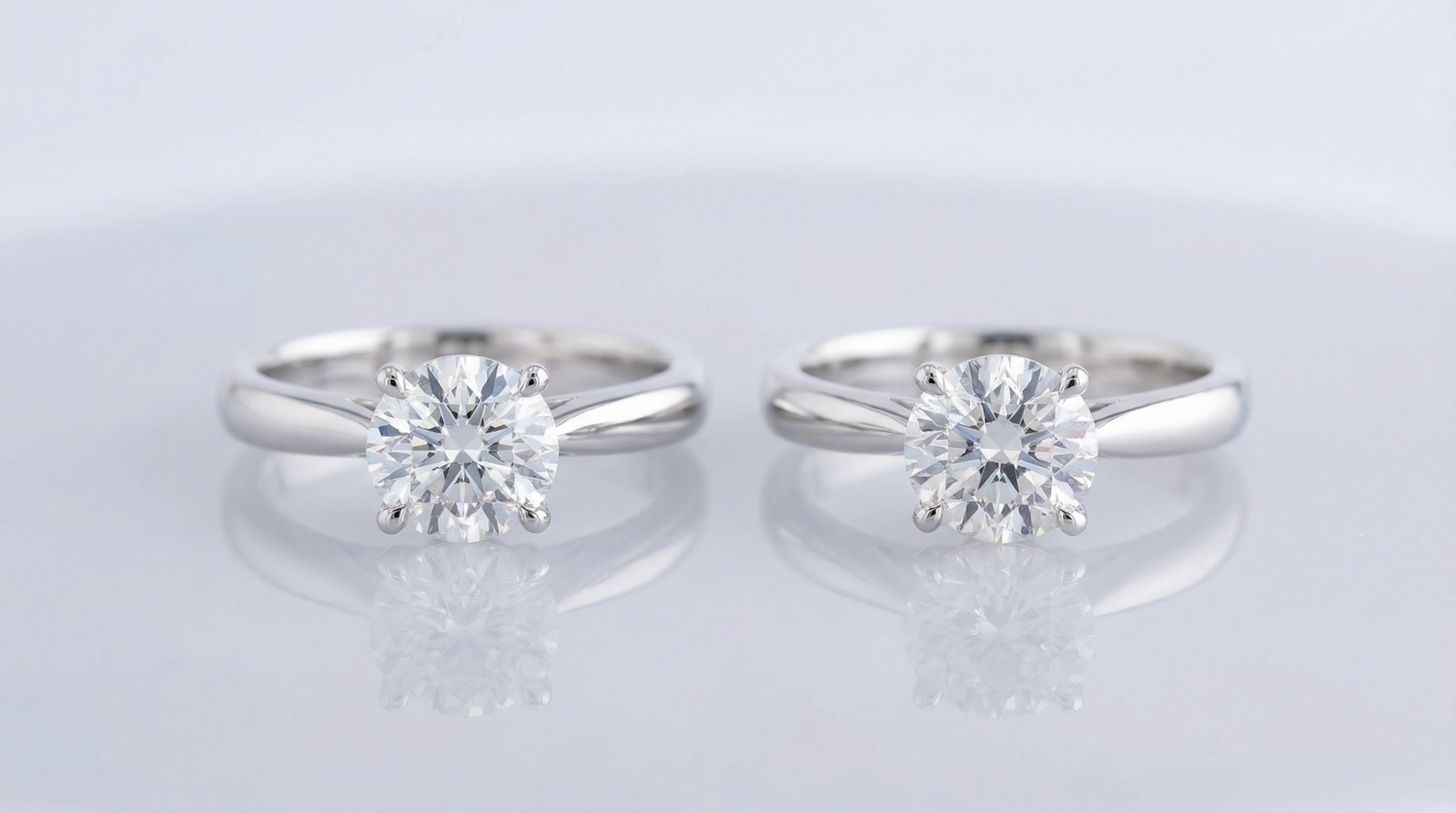
A lab grown diamond is a real diamond. It has the same chemical composition (pure carbon), the same crystal structure, and the same optical and physical properties as a mined diamond. The difference is origin: lab grown diamonds are created in a controlled environment using either CVD (Chemical Vapor Deposition) or HPHT (High Pressure High Temperature) technology, rather than forming over billions of years underground.
Both IGI and GIA – the world’s most trusted gemological laboratories – grade and certify lab grown diamonds using the same 4Cs system as natural diamonds: cut, colour, clarity, and carat. Every lab-grown diamond we use is independently certified — see our GIA vs IGI certification guide for what that actually covers.
Price: The Most Important Factor for Retailers
Lab grown diamonds typically retail at 60–80% less than mined diamonds of equivalent quality. For your customers, this means significantly more diamond for their budget. For you as a retailer, it means:
- Higher unit sales volume – more customers can afford fine diamond jewelry
- Attractive price points for gifting, everyday wear, and fashion jewelry categories
- Ability to compete online without racing to the bottom on margin
Wholesale prices for lab grown diamonds have continued to decrease as technology scales – making now an ideal time to establish supplier relationships before the market becomes more competitive at retail level.
What Customers Are Actually Asking For
Consumer research consistently shows that younger buyers – particularly millennials and Gen Z – place high value on ethical sourcing and sustainability. Lab grown diamonds answer both: no mining, no environmental disruption, and a verifiable origin. In markets like California, New York, London, and Sydney, leading with ‘lab grown’ is increasingly a competitive advantage, not a compromise.
At the same time, bridal and heritage customers often still prefer natural diamonds. The retailers performing best are those who offer both – letting the customer choose based on their values and budget.
At Oberon Jewels, we craft both natural and lab-grown diamond jewelry with precision finishing and premium quality–so your customers get the same luxury, brilliance, and craftsmanship, no matter their choice.
Lab Grown vs Natural Diamonds: Practical Considerations for Retailers
- Certification is non-negotiable. Only stock lab grown diamonds with IGI or GIA certificates. Uncertified stones create liability and erode customer trust.
- Educate your staff. The biggest barrier to lab diamond sales is salespeople who are unsure how to explain them. Train your team to answer the basic questions confidently.
- Display them equally. Keeping lab grown diamonds in a separate, less prominent case signals they are inferior. They are not. Treat them as equals.
- Pricing strategy. Some retailers price lab grown diamonds based on a percentage below natural diamond. Others price on value delivered. Test both approaches with your customer base.
Sourcing Lab Grown Diamonds for Your Store
The most cost-effective way to source lab grown diamond jewelry is direct from a manufacturer – not through a domestic distributor who adds margin at every step. Surat, India is the global center of lab grown diamond manufacturing, combining cutting expertise, modern technology, and competitive wholesale pricing. If you’re sourcing lab-grown for the first time, our guide to sourcing lab-grown diamond jewelry from India walks through what to expect.
Oberon Jewels supplies certified lab grown and natural diamond jewelry wholesale to retailers in the USA, UK, Australia, Canada, New Zealand, and Brazil. We offer no minimum order quantities, so you can introduce lab grown diamonds to your collection without financial risk. Contact us to receive our wholesale catalogue.